
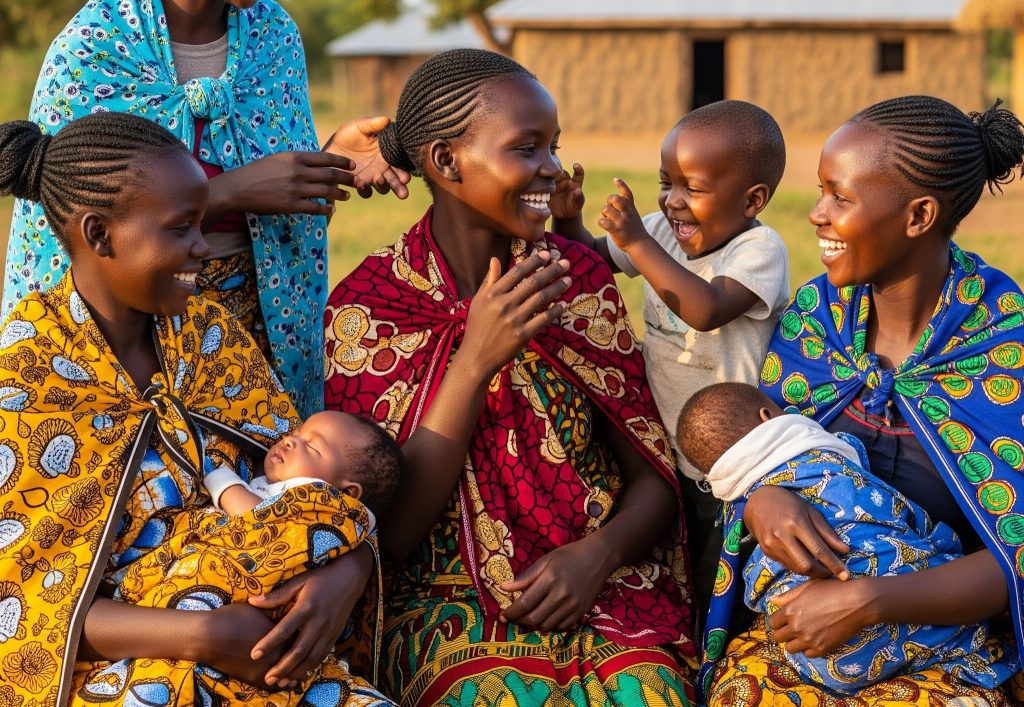
CIPHER, KUHeS, Ministry of Health, and UNICEF Join Forces to Improve Immunization and Childhood NCD Initiatives
Malawi has made significant strides in child health, particularly through its Expanded Programme on Immunization (EPI) and efforts to address non-communicable diseases (NCDs) in children. However, critical gaps remain in service availability, quality, and trained personnel, especially in rural areas. To tackle these challenges, CIPHER, KUHeS the Malawi Ministry of Health, and UNICEF are collaborating on an innovative implementation research project titled:
“Understanding Implementation of Child Health Services Across the Life Course: Implementation Research on Immunization and Childhood NCD Initiatives in Malawi.”
This study aims to evaluate and strengthen the integration of immunization and NCD services within Malawi’s primary healthcare system.
Background: Progress and Challenges
Immunization Achievements
Malawi’s EPI has achieved over 90% national coverage for key vaccines, including DPT3 and MCV1, by 2021. The program has also introduced new vaccines, such as:
- Rotavirus (to combat diarrheal diseases)
- HPV (for adolescent girls, preventing cervical cancer)
To reach marginalized and zero-dose children, Malawi has employed strategies like:
- Community mapping and outreach
- Integration with nutrition and child health services
- Deployment of Health Surveillance Assistants (HSAs) for community-based delivery
Growing Burden of Childhood NCDs
Non-communicable diseases (NCDs) account for 25.4% of Disability-Adjusted Life Years (DALYs) and 32% of deaths in Malawi. Alarmingly, 60% of NCD-related DALYs occur before age 40, with common conditions including:
- Type 1 diabetes
- Sickle cell disease
- Congenital heart disease
To address this, the Ministry of Health has:
- Prioritized 38 NCDI conditions
- Established 163 PEN (Package of Essential NCD Interventions) sites and 6 PEN-Plus sites (providing specialized care for severe NCDs at the district level)
Despite these efforts, challenges persist, including:
- Limited service availability and quality in rural areas
- Shortage of trained healthcare workers
- Gaps in integrating NCD services with routine platforms like immunization and adolescent well-care visits
Research Objectives
This implementation research seeks to:
- Evaluate the feasibility and effectiveness of integrating immunization and NCDI services within primary healthcare.
- Identify factors affecting the uptake of routine immunizations in children and adolescents.
- Assess the quality, collection, and utilization of immunization and NCDI program data.
Key Research Questions
Non-Communicable Diseases (NCDs)
- How can early detection and management of childhood NCDs be improved through community-based strategies, health worker engagement, and service integration?
- What are the challenges and opportunities in managing Type 1 diabetes among children and adolescents?
- Why are reporting rates for pediatric NCDs low?
Immunization
- What are the barriers and enablers of vaccine uptake after the first year of life?
- How can the uptake and sustainability of new vaccines (HPV, TCV, MV, IPV2) be promoted?
- What factors affect EPI data quality?
Methodology
Study Design & Locations
- Mixed-methods approach (quantitative and qualitative)
- Study districts: Rumphi, Kasungu, Ntchisi, Chikwawa, Mangochi
Study Participants
- Primary caregivers of children under 18
- Children and adolescents with or at risk of NCDs
- Health workers (HSAs, nurses, clinicians)
- District Health Management Teams (DHMTs), EPI coordinators, NCD focal persons
- Community leaders, school representatives, religious leaders, NGOs
Data Collection & Analysis
- Quantitative: Surveys (635 respondents per district) analyzed using descriptive statistics, bivariate/multivariate regression.
- Qualitative: In-depth interviews (IDIs), focus group discussions (FGDs), and key informant interviews (KIIs) to reach thematic saturation.
- Pre- and post-intervention analysis in Mangochi to assess impact.
Ethical Considerations
- Approval from COMREC & District RECs
- Informed consent for adults, assent + parental consent for minors
- Data security: Encrypted storage, anonymized identifiers, restricted access
Expected Outcomes & Impact
This research will: Identify best practices for integrating immunization and NCD services. Improve vaccine uptake and NCD management in children. Strengthen data systems for better decision-making. Inform policy adjustments to enhance child health services nationwide.
By leveraging partnerships with CIPHER, KUHeS, the Ministry of Health, and UNICEF, this study will contribute to real-time course correction in Malawi’s EPI and PEN-Plus programs, ensuring no child is left behind.