
26–28 November 2025 | Bingu International Conference Centre, Lilongwe, Malawi
In late November 2025, public health leaders, researchers, and practitioners from across Africa converged at the Bingu International Conference Centre (BICC) in Lilongwe for the Association of Schools of Public Health in Africa (ASPHA) Annual Conference and Annual General Meeting. Co-hosted with the Kamuzu University of Health Sciences (KUHeS) and the Public Health Institute of Malawi (PHIM), this year’s gathering unfolded under a timely theme: “Harnessing Community Health Systems and Technology for Public Health Response.” The three-day event brought together a vibrant community eager to exchange knowledge, share innovations, and strengthen collaborations that shape the future of public health on the continent.
The 2025 ASPHA Conference was designed to:
- Foster the exchange of experiences and innovations in community health systems and technology.
- Provide a platform for oral presentations, posters, panel discussions and group forums that inspire dialogue and new ideas.
- Strengthen partnerships among public health schools, research institutions, and practitioners across Africa.
The conference opened with a warm welcome from ASPHA leaders and host institutions. Distinguished speakers—including Prof. Joseph Mfutso-Bengo, Assoc. Prof. John Phuka, Prof. Macpherson Malewa, and ASPHA President Prof. Margaret Kaseje—set an inspiring tone for the days ahead.
Honourable Madalitso Baloyi, Minister of Health and Sanitation, officially opened the event, marking the start of thought-provoking sessions and meaningful exchanges. A keynote on Malawi’s public health landscape by Dr. Gerald Manthalu sparked reflections on system strengths and challenges. Presentations throughout the day explored topics such as mental health, malaria, reproductive health, communicable disease dynamics, and immunization equity.
The CIPHER Team: Contributions and Highlights
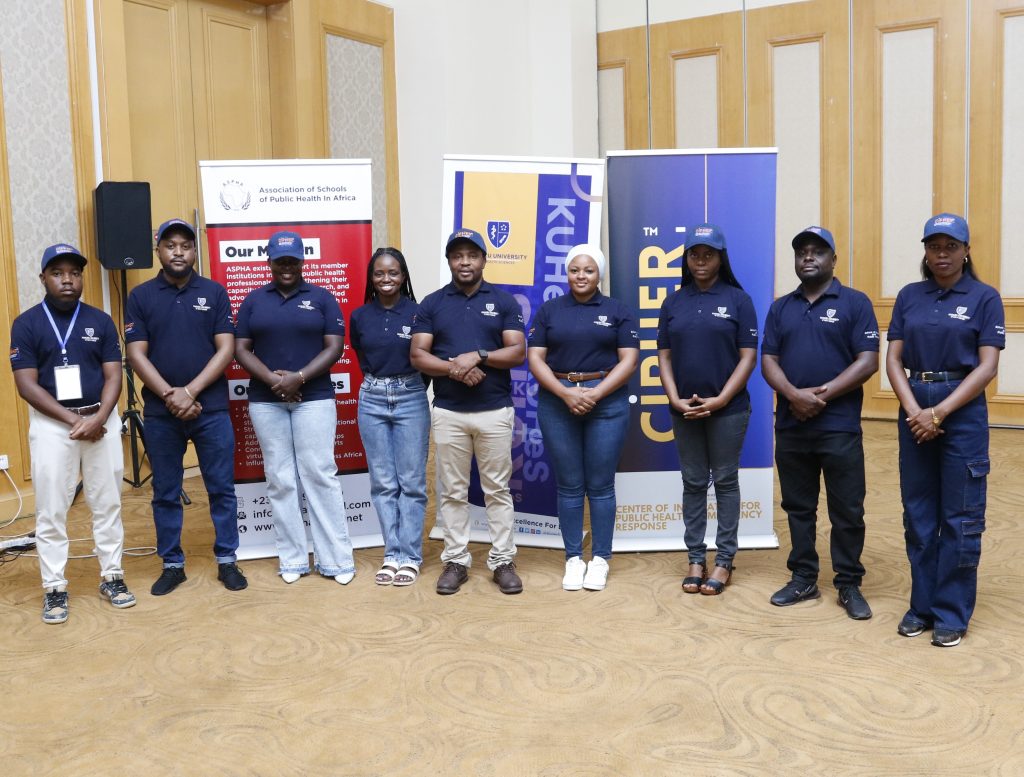
The CIPHER team played a vital role throughout the conference, supporting the event and showcasing important research.
- Assoc Prof. John Phuka
Prof. Phuka delivered a keynote address providing an overview of the School of Global and Public Health (SOGAPH) in Malawi. His presentation highlighted the institution’s mandate, strategic priorities, and contributions to advancing public health education and research in the region.
- Beverly Laher
Beverly delivered an oral presentation on the “Feasibility And System Readiness For Integrating Childhood Non-Communicable Disease (NCD) Screening Into Routine Child Health Services In Malawi.” Her work explored operational considerations and the potential for strengthening early detection of NCDs in paediatric populations.
- Lonjezo Dzekedzeke
Lonjezo presented a poster titled “Climate Change as a Threat to Maternal Health Nutrition: Perceived Shocks and Their Impact on ANC Access During Malawi’s Transition from IFA to MMS.” His study examined pregnant women’s perceptions of climate-related shocks and how these influence access to antenatal care services during the national transition from iron-folic acid to multiple micronutrient supplementation.
- Dr Esther Malata
Dr. Malata presented a poster on the “Comparative Analysis of Side Effect Burden and Determinants of Adherence Among Pregnant Women Receiving Iron-Folic Acid (IFA/FEFO) and Multiple Micronutrient Supplements (MMS) in Malawi.” Her study compared side-effect experiences, adherence levels, and the underlying determinants influencing supplement uptake during the IFA and MMS implementation periods.
- Hannah Lungu
Hannah presented a poster on the “Agreement of Point-of-Care Devices for Anaemia Testing,” with a specific focus on assessing agreement between the EzeCheck and HemoCue devices for routine anaemia screening in community settings.
- Beatrice Mkomadzinja
Beatrice delivered an oral presentation titled “Exploring How Social Behaviour Change (SBC) Approaches Influence Pregnant Women’s Awareness and Perceptions of MMS in Mchinji District.” Her objective was to assess how SBC strategies support the introduction, acceptance, and uptake of MMS within maternal health services at community and facility levels.